Category: Applications

  • Art

    Art

    MONDRIAN

    Mondrian
    Later Work. The Golden Mean Gauge illustrating the main landmarks.

    Mondrian seems to have spent his whole life drawing short black lines trying to find out why certain lines look good and others not so good as above. He is reported to have known about the Golden Proportion but made no claims that it influenced his work in any way. Looking at his extensive work on lines, it is clear that he was experimenting with what looked good. He went through many changes in style and retrospectively one can trace the dramatic evolution of his experiments in his early work with different line lengths and their positioning. He saw that certain line relationships looked better than others and constantly varied the arrangement to find what the best looked. In his later work we appreciate and enjoy a most beautiful balanced and dramatic painting. Gone are all the apparent immature fumbling lines. He never explained what he was searching for and neither what he found and neither described what the main features of his beautiful rectangles were. We as analytical scientists come along and reveal that he as an artist he included abundant Golden Proportions. We all have a strong sense of the Golden Proportion, but not only don’t we realise it but we don’t even realise how frequently, we naturally use it. Even our own ordinary handwriting is full of Golden Proportions. Every time we decorate a cake or make a flower arrangement, we unknowingly balance our design with the Golden Proportion Not, surprisingly one can detect many Golden Proportion relation ships between the searching lines in Mondrian’s early work, but they are nothing in comparison to the bold and beautiful rectangles drawn later. No wonder the Tate was willing to pay £2.8 million for Mondrian’s “Composition” with Red 1935 causing a public outcry. My letter published in the Evening Standard pg. 28 Dec 8 1999 however, encouraged the purchase.

    Early Work

    early-work

  • Nature

    Nature

    Good proportion is an important element of beauty as seen in these pictures:

    Leaf

    Peacock feather

    Peacock feather

    A Golden Mean Gauge is superimposed on one of the dominant landmarks of the feather showing them to be in the Golden Proportion. There are at least 12 different Golden Proportions which can be identified on the dominant landmarks on the peacock feather. The peacock feather has been chosen because it has simple flat surfaces which lends itself to a clear and non-controversial Golden Proportion analysis.

    Bird

    Bird

    A Golden Mean Gauge is superimposed on the dominant colour seperations.


    Flower

    A Flower

    A Golden Mean Gauge is superimposed on a flower.

    moth

    Moth

    A Golden Mean Gauge is superimposed on a moth. The moth wing has been chosen because it has simple flat surfaces which lends itself to a clear and non-controversial Golden Proportion analysis.


    stipes

    Stripes

    A Golden Mean Gauge is superimposed on the stripes of the tail. The same applies to the stripes of the Zebra.


    flowers

    Flowers


    petal

    Petal


    insect

    Insect

    Two Golden Mean Gauges are superimposed on an insect showing compound golden proportions. Nature abounds in examples of many compound golden proportions in any situation.
  • Architecture

    Architecture

    We naturally enjoy the golden proportion divisions of the space of our monuments and homes.

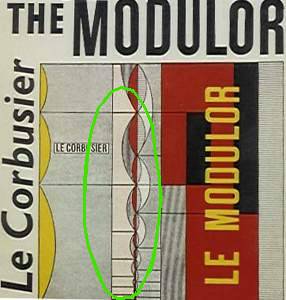
    The famous Parisian architect, La Corbusier, wrote a book called “Le Modulor” as a guide to the use of the Golden Proportion in architecture. The cover of this book shows different views of the ladder grid in the Golden Proportion. We shall later see this ladder in numerous contexts, Link to Dental Grids, Geometric Progression, including the famous Fibonacci series of the numbers of nature.

    modulor
    Similar Dental and Picasso Grid:

    geometric3
    proportions-teeth-smile-04

    Examples

  • Design

    Design

    The golden proportion as seen in different designs

    Fashion

    The golden mean gauge shows that the dominant landmarks are in the golden proportion.


    The golden mean gauge shows that the dominant landmarks are in the golden proportion

    In Car Design

    Car manufacturers are most likely employ the most artistic designers they can find who intuitively use the golden proportion as shown in the thumbnails below.


    General

    All good design abound with examples of the Golden Proportion like the clothes or handwriting we have already seen. The more skilful the artist the closer his or her art and design conforms to the Golden Proportion as shown in the following pictures. The doninant landmarks are in the Golden Proportion.

  • Hand Writing

    Hand Writing

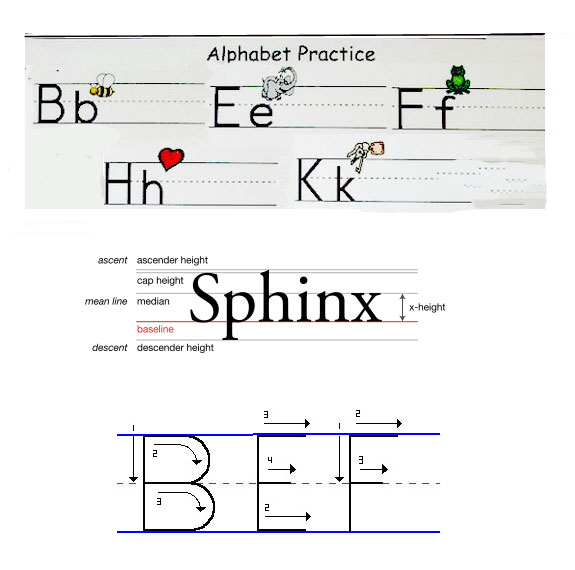
    We all have more knowledge of the Golden Proportion than we ever suspected. Our handwriting shows the Golden Proportion over and over. When we write, we place a horizontal bar in the capital (upper case) letters, A E F R B H P quite casually and without any thought. When these letters are enlarged and measured, we see that the horizontal bar divides the letter into a larger and a smaller part which is usually surprisingly close to the Golden Proportion, as seen in the letters B and E below. Similarly the horizontal bar of the T is also divided into the Golden Proportion.

    hand-writing

    In the same way, the artists quite naturally or instinctively used this proportion so it should not be too surprising to see the Golden Proportion appearing in the examples of arts and crafts.

    alphabetAll this despite the carefull training that we have all had to make the top and bottom half of the letters equal size as can be seen on the practice tables, right side[/vc_column_text][/vc_column][/vc_row]
  • Crop Circles

    Crop Circles

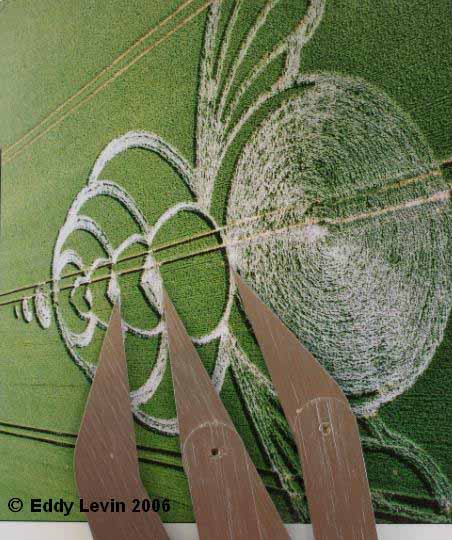
    Crop circle pictures by courtesey of Lucy Pringle

    The crop circles are huge, about 300 feet in diameter. The pattern is made by the difference between the standing crop and the flattened crop, but even the flattened stalks are very different from just ordinary bent over or trodden on stalks. Found mainly in fields of cereal, wheat, barley, rye etc The nodes on the stalks are often enlarged and the distance between the nodes is often increased. The novice, standing in the midst of a crop circle, may have no idea of the magnitude of this phenomena, a reflection of ordinary life, being in the midst of a cosmic event with no notion of what is happening around him or her. It is only when and if one is privileged to see the crop circle from a height, i.e. the top of a hill, from a helicopter, or a photograph from these heights, that the intricate pattern becomes clear. There are more and more reports coming in of their presence being found abroad but mostly they appear in Wiltshire, Southern England They have been reported for the past 100 years but the intensity, frequency and complexity seem to have increased ,year by year with a total number of many thousands. over the past 25 years.

    Amongst them, some are identified as fakes and a number of individuals take great pride in confessing their involvement, but most people would agree that the sophistication and sheer beauty of the geometry is way beyond the ordinary person’s ability
    As yet there are no totally plausible theories as to how they have been made.
    They are often reported as appearing overnight. The most popular theory to date is a connection with UFOs, but with negligible evidence.

    The adjacent pictures show the Golden Mean Gauge superimposed on the dominant features, showing the golden proportion between the large and the small segments. This is just another example of beauty in the world around us that is in the Golden Proportion.

    {Picture to be inserted showing the enlarged nodes and not bent at ground level and discolouration}

    Please enter your comments below which may be include at a later date, with or without your name
    Links to crop circle websites[/vc_column_text][/vc_column][/vc_row]

  • Literature

    Literature


    Bible. 5 books of Moses. Chumash


    Ahava


    Vayahi binsoa


    Esnachta

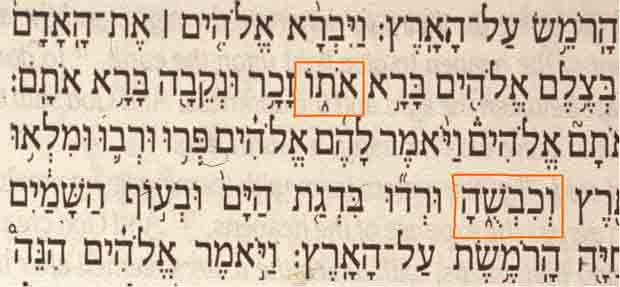
    Rabbi Ginsburg, a mathematician of Gal Einai has observed that the ‘Esnachta’, one of the musical notes that denotes a pause in a sentence of the Torah, divides the sentence into a larger phrase and a shorter phrase. When all the words of the first 35 verses of Genesis are counted then there is a precise Golden Proportion between the larger and the shorter phrase.


    esnachta

    esnachtaDetail


    Jenkins


    Limericks

    If we count up the different types of syllable, we discover that out of a total of 34 syllables, 21 are unstressed (the di’s) and 13 are stressed (the dum’s). There are 8 syllables in the longer lines and 5 in the shorter ones. Out of the total of 5 lines, 3 are long ones containing 3 metrical feet (i.e. 3 stressed dum’s), and 2 are shorter ones containing 2 metrical feet. Anyone familiar with elementary mathematics will recognise these numbers as belonging to the well known Fibonacci series: 1, 1, 2, 3, 5, 8, 13, 21, 34 … where each successive number is the sum of the two preceding numbers.

    Dr Kevin Jones is Reader in Music at Kingston University in Surrey. He has degrees in Mathematics and Computer Science as well as in Music.

    by Kevin Jones

    There was an Old Man with a beard,

    Who said, “It is just as I feared! –

    Two Owls and a Hen,

    Four Larks and a Wren,

    Have all built their nests in my beard!”

    [Edward Lear]


    AENIED by VERGIL

    Dr Duckworth studied the presence of the Golden Proportion in the structure of the Aeneid by Vergil for a master’s degree. His thesis was printed in 1962 entitled “Structural patterns and proportions in Vergil’s Aeneid” by University of Michegan.

    He found that the sentences were made up of a larger phrase and a smaller phrase and over 95% of these two phrases were in the Golden Proportion.

    This is identical to the division of a sentence by the Esnachta symbol in the reading of the 5 Books of Moses and similar to the Limerick.

  • Medical

    Medical

    Not only is our handwriting in the Golden Proportion but even our hearts beat in the Golden Proportion.

    Bellow are photgraphs of Golden Proportion gauge on ECG (electro cardio gram) tracings. These are the electronic tracings of the heart contractions of a normal heart.